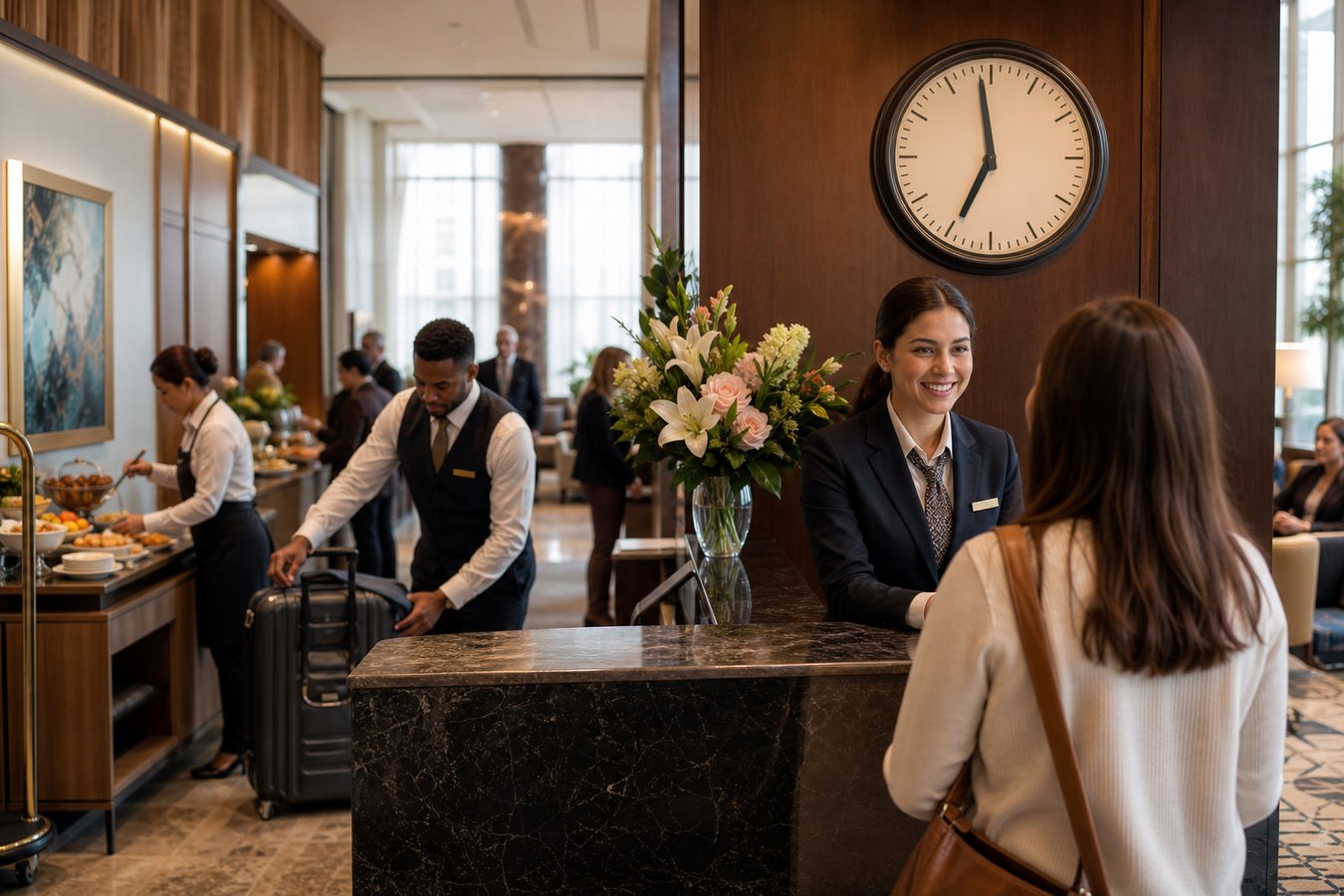
You know how to welcome guests, handle reservations, and deliver excellent service. But are you ready for the unwritten rules of an American hospitality workplace?
Starting your hospitality journey in the United States is about more than improving your technical skills. It's also about understanding how people communicate, collaborate, solve problems, and approach professional responsibilities.
From the way you greet your supervisor to how you handle guest complaints, small workplace habits can make a big difference in your experience.
For international interns and trainees, adapting to a new workplace culture can be just as important as learning new hospitality procedures.
So, before stepping into your next hotel, restaurant, or resort, let's explore seven workplace habits that can help you feel more confident and prepared for American hospitality culture.
1. Being on Time Means Being Ready

In American hospitality, punctuality isn't simply about arriving at the workplace. It's about being prepared to begin your responsibilities when your scheduled shift starts.
Imagine your shift begins at 7:00 AM. Arriving at exactly 7:00 AM but still needing to change into your uniform or prepare your workstation could delay the team's operations.
Hotels and restaurants depend on smooth transitions between shifts, especially during busy breakfast services, check-in periods, and special events.
How to build this habit:
- Plan your commute with extra time for unexpected delays.
- Understand your property's clock-in and attendance policies.
- Prepare your uniform and necessary equipment according to workplace procedures.
- Notify your supervisor promptly if an unavoidable delay occurs.
💡 Pro Tip: Aim to arrive early enough to be fully prepared, while following your employer's policies on clocking in and paid preparation time.
Remember: Reliability is one of the simplest ways to build professional trust.
2. Speak Up: Communication Is Part of Professionalism

In some cultures, employees may hesitate to ask questions because they don't want to appear inexperienced.
However, many American workplaces encourage employees to communicate openly, ask for clarification, and share constructive ideas.
If you're unsure about a task, asking questions is usually better than making assumptions that could affect guest satisfaction.
For example, instead of staying silent when you don't understand an instruction, you could say:
"Just to make sure I understand correctly, would you like me to prepare the tables before the guests arrive?"
This demonstrates attentiveness and a willingness to perform your responsibilities correctly.
Try practicing these communication habits:
- Ask questions when instructions are unclear.
- Provide updates when tasks are completed.
- Communicate potential problems before they escalate.
- Listen carefully and confirm important details.
💬 Workplace Tip: Clear communication isn't about speaking perfect English. It's about making sure everyone understands what needs to be done.
3. Take Initiative, but Know Your Responsibilities

Imagine you're working in a hotel restaurant. You've completed your assigned tasks, but your colleagues are still preparing for a busy dinner service.
What should you do?
Rather than simply waiting for your next instruction, you can ask your supervisor whether there is another appropriate task you can help with.
Taking initiative demonstrates curiosity, awareness, and a willingness to contribute.
However, initiative doesn't mean taking over someone else's responsibilities or performing tasks outside your training plan.
Here's how to show initiative professionally:
- Offer assistance when your assigned tasks are complete.
- Suggest improvements respectfully.
- Take responsibility for tasks within your role.
- Ask permission before attempting unfamiliar procedures.
For J-1 interns and trainees, initiative should support the learning objectives outlined in their approved training plans.
🌟 The best professionals don't just notice what needs to be done. They understand how to contribute responsibly.
4. Teamwork Matters More Than Job Titles
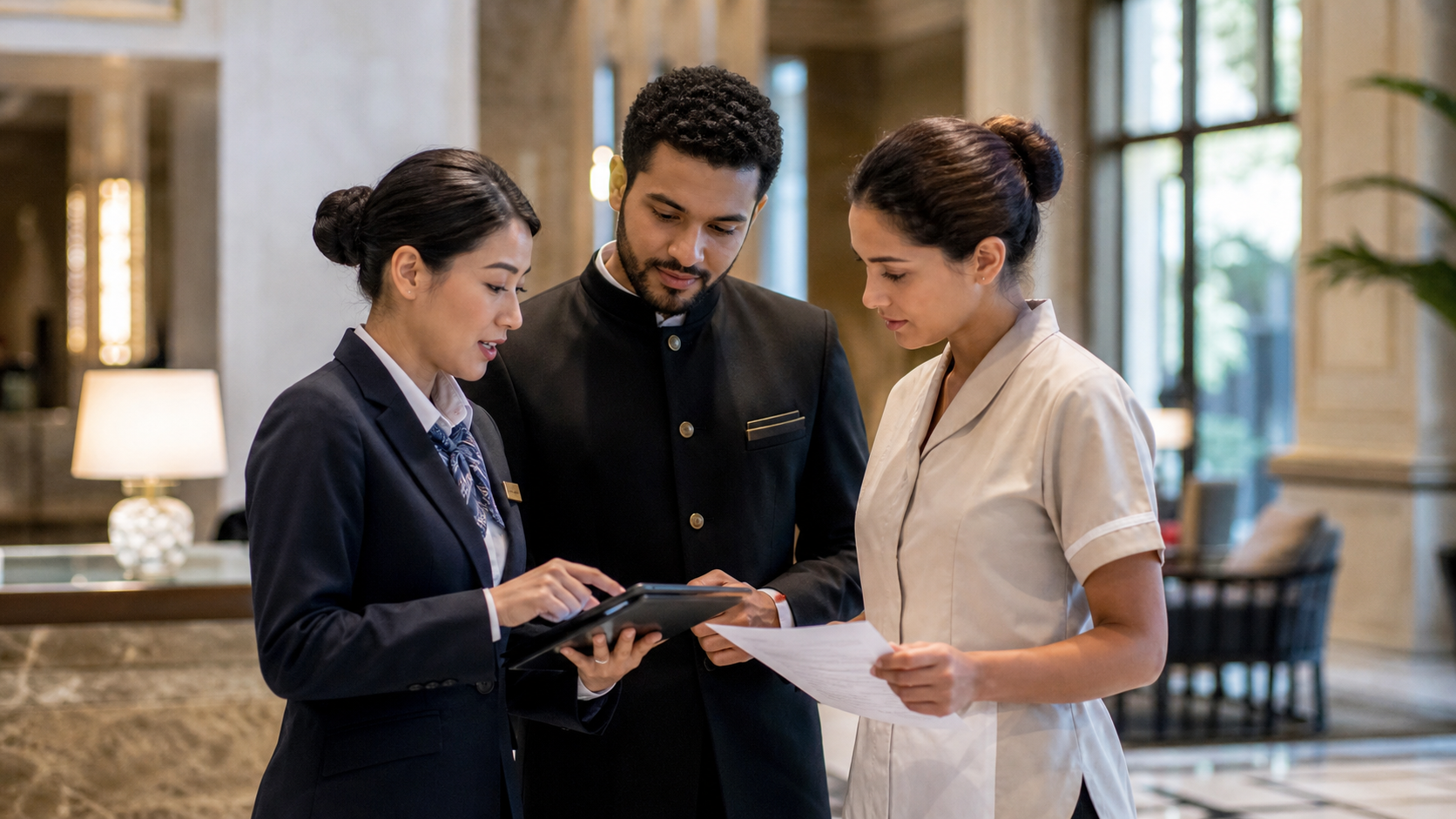
A memorable guest experience rarely comes from one person.
The front desk coordinates with housekeeping. The kitchen works closely with restaurant servers. The concierge communicates with transportation providers.
Every department contributes to the overall guest journey.
In American hospitality workplaces, collaboration often requires employees to communicate across departments and support shared service goals.
How to become a stronger team player:
- Treat colleagues from every department with respect.
- Share relevant information during shift handovers.
- Offer support when appropriate.
- Recognize other team members' contributions.
- Avoid blaming others when problems arise.
For example, if a guest's room isn't ready, the front desk and housekeeping teams need to coordinate professionally rather than point fingers.
💡 Remember: Great hospitality is never a solo performance. It's a team effort.
5. Feedback Is an Opportunity to Improve

Receiving feedback from a supervisor can feel intimidating, especially when you're adjusting to a new language and workplace culture.
But feedback is an essential part of professional development.
In many U.S. workplaces, supervisors provide direct suggestions about performance, communication, efficiency, and guest service.
Rather than interpreting every correction as criticism, try viewing it as an opportunity to develop your skills.
When receiving feedback:
- Listen without interrupting.
- Ask questions if something is unclear.
- Thank your supervisor for the guidance.
- Apply the feedback to your next task.
- Follow up to understand whether you've improved.
For example:
"Thank you for the feedback. I'll work on improving that during my next shift."
This simple response demonstrates professionalism and a growth-oriented mindset.
Your goal isn't to be perfect on your first day. It's to become better throughout your training experience.
6. Professionalism Goes Beyond Your Uniform

Your appearance may be the first thing guests notice, but professionalism includes much more than looking presentable.
It also involves your attitude, communication, respect for others, and ability to maintain appropriate workplace boundaries.
American hospitality workplaces commonly establish standards for grooming, guest interactions, confidentiality, and professional conduct.
Essential habits to practice:
- Follow your property's grooming and uniform guidelines.
- Use respectful language with guests and colleagues.
- Respect personal boundaries and cultural differences.
- Protect guest information and privacy.
- Follow workplace policies regarding phones and social media.
For example, even if you have a friendly relationship with a guest, sharing their personal information or posting their photograph without appropriate authorization could violate workplace policies.
💬 Professionalism is what you demonstrate even when nobody is watching.
Also Read: J-1 Visa Program vs. Local Internship: Which Is Better for Your Hospitality Career?
7. Be Friendly, but Respect Cultural Differences

American hospitality is often associated with warm greetings, approachable communication, and friendly guest interactions.
However, friendliness doesn't mean every conversation should become personal.
Understanding the balance between warmth and professionalism is especially important when working in a multicultural environment.
You may encounter colleagues and guests with different expectations regarding humor, personal space, communication styles, and appropriate conversation topics.
A few useful practices:
- Greet guests and colleagues warmly.
- Avoid making assumptions based on nationality or background.
- Be mindful of sensitive personal topics.
- Adapt your communication style to the situation.
- Respect differences without judging them.
For example, some guests may enjoy friendly conversations, while others prefer quick, efficient service.
The ability to recognize these preferences is part of delivering personalized hospitality.
🌎 Cultural awareness isn't about memorizing every cultural rule. It's about approaching people with curiosity, respect, and empathy.
Your American Hospitality Workplace Checklist
Before beginning your international training experience, ask yourself:
✅ Am I prepared to arrive on time and ready for my shift?
✅ Am I comfortable asking questions when I need clarification?
✅ Do I understand my responsibilities and training objectives?
✅ Am I willing to collaborate with colleagues from different departments?
✅ Can I receive feedback with an open mind?
✅ Do I understand the importance of workplace professionalism?
✅ Am I ready to learn from cultural differences?
If you're still developing some of these habits, that's completely normal. International training is an opportunity to learn through real-world experience.
Also Read: Beyond Borders: Catharina's J-1 Journey of Growth
Turn Cultural Awareness into Career Growth with HRC International
Understanding American workplace culture is an important step toward a successful international hospitality experience.
Through HRC International's hospitality training opportunities in the United States, eligible participants can gain practical industry exposure, develop professional skills, and experience a different workplace culture.
Whether your interests lie in Culinary Arts, Food & Beverage, or Front Office operations, learning to adapt to new professional expectations can help you make the most of your training journey.
Because succeeding in international hospitality isn't just about knowing how to do your job. It's about learning how to thrive in a new environment.
🌟 Ready to take your hospitality career beyond borders?
Explore HRC International's hospitality training programs and discover how an international experience could support your professional development.