2026 MICHELIN Keys: What They Mean for the Future of Hospitality
The hospitality industry continues to evolve as travelers seek more meaningful, personalized, and me...

We strongly encourage teachers to come to the US prepared to cover living expenses and deposits for at least 2 months prior to receiving your first paycheck. Please keep in mind, these are estimates based on national and state averages, and these will vary widely depending on your additional resources section at the bottom of this document. As always, the information provided by HRC is not guaranteed and is just a starting point for you.
Remember to always do your own research!
Predeparture Expenses
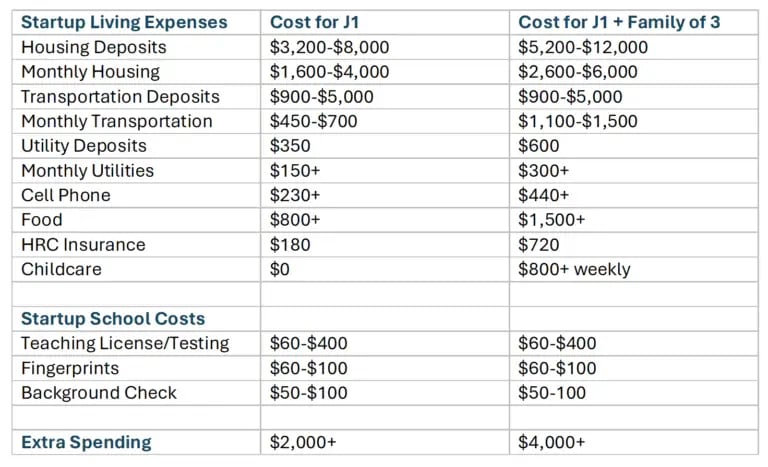
Startup Expenses
Startup expenses provided are an estimated range based on a national average. Additional costs may be incurred depending on your specific situation. You should expect to arrive in the US with these fund, and enough for living expenses during your first 2 months in the US before you are able to receive your first paycheck. Along with living expenses, you will need to be able to cover the costs of obtaining your teaching license, fingerprints, background check, and any other documents required by your host school.
The Evaluation Company is HRC's recommended international transcript evaluation service. They have created a custom application for HRC International to ensure that the right kind of evaluation is selected at a discounted rate.
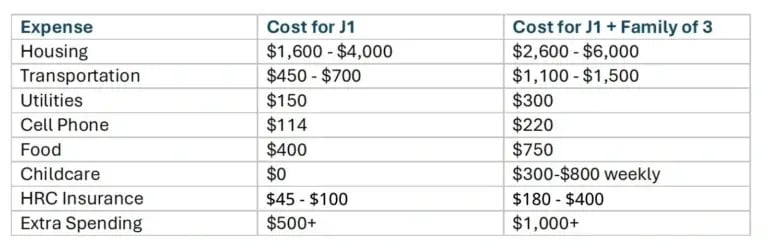
Recurring Monthly Expenses
Recurring monthly expenses refer to the costs you can expect to be made each month after you arrive in the US. These are all going to pertain to your living expenses and vary depending on your location and lifestyle. There's a comprehensive tool available to compare living expenses per city.
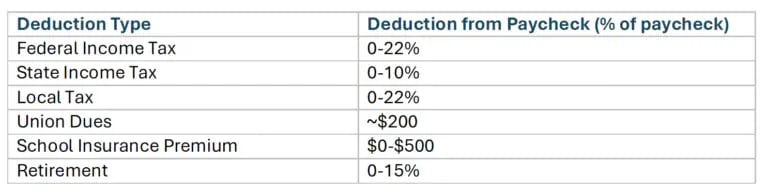
Taxes/Deductions
Taxes and deductions are going to be taken directly from your paycheck before you receive it. These will vary widely depending on several factors including filing status, state, city, municipality, union participation, insurance selection, etc. The taxes and deductions listed below are the standard deductions you can expect to have held from your paycheck each pay period. Check out this comprehensive Tax Witholding Estimator.
Other Expenses
Please note: rates are subject to (annual) increases and are not guaranteed to remain the same for the duration of your program.
Sometimes HRC works with third-party agents. These agents (often in your home country) might charge you an additional fee for services such as assistance with the search for a host employer, arranging travel and accommodation upon arrival, education accreditation or other services but this fee should never exceed $2,500-$3,000. Recent Partners:
Would you like to find out more? Call us on +1 404 257 9400 or send your resume to teach@hrc-international.com
We strongly discourage applying if you are not 100% sure. Nevertheless, upon acceptance by the employer, no refund of the program fee, insurance fee or visa fee is issued, except when: a) serious personal injury or death in the immediate family (parent or sibling) or b) denial of visa issuance by the immigration authority prevents you from starting the placement. If the application is cancelled before forms DS-2019 is issued, 100% of the paid J-1 visa fee and 100% of the paid program- and insurance fee minus a $200 non-refundable administrative fee is refunded. After Form DS-2019 is issued, but before arrival in the US, 50% of the paid J-1 visa fee and 100% of the paid program- and insurance fee minus a $200 non-refundable administrative fee is refunded. No refunds of any kind are issued after arrival in the US. SEVIS fees are non-refundable. In the event that you have prepaid program- and insurance fees, 100% of the prepaid months minus an admin fee of $25 will be refunded in full only for the full months that are unused. For refunds of the free visa program, scholarship program or financial aid program other rules may apply.