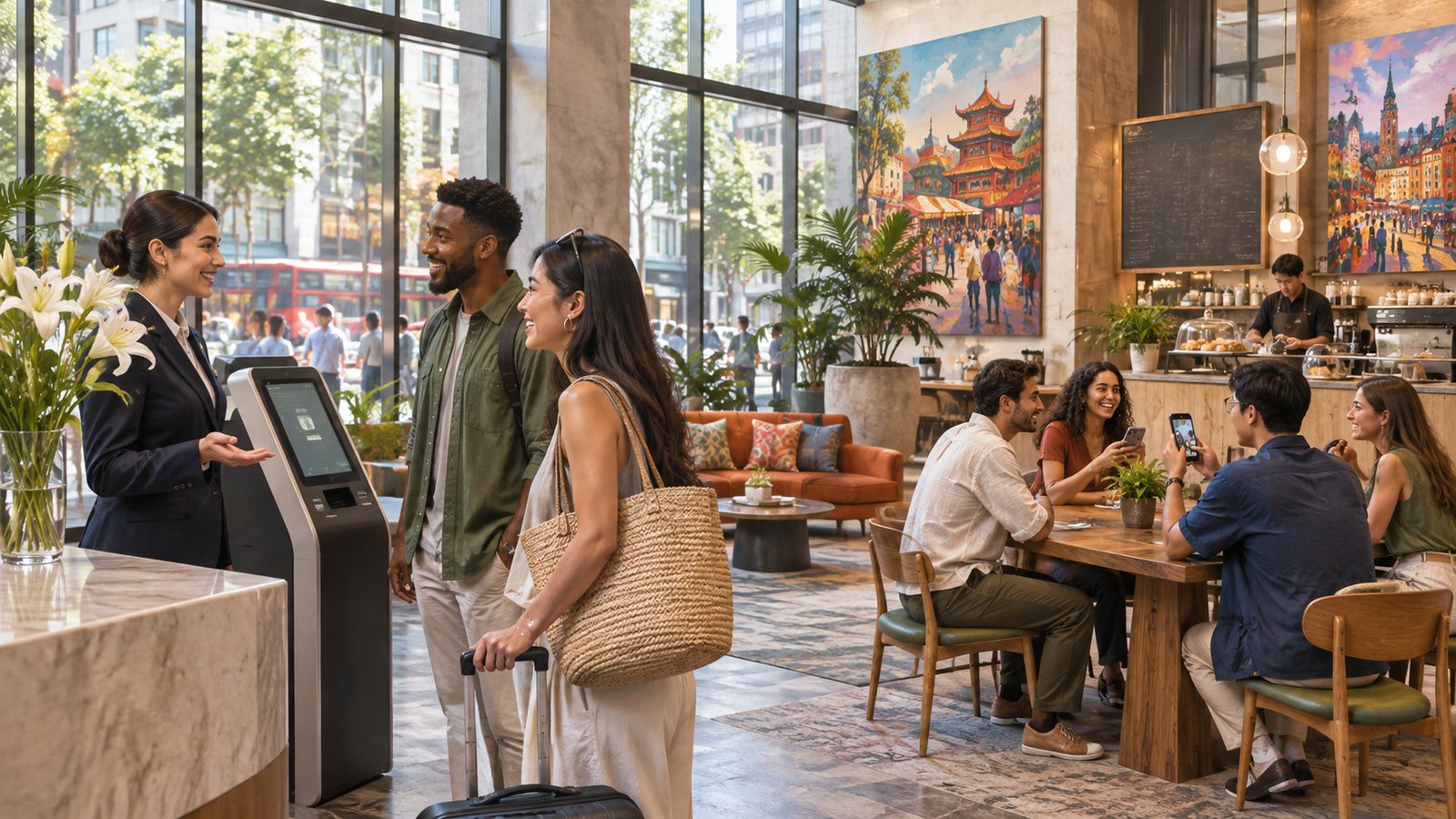
Forget everything you thought you knew about the next generation of travelers.
For Generation Z, a memorable hotel stay isn't necessarily about marble lobbies, expensive chandeliers, or five-star labels.
It might be discovering a hidden local café, checking into a hotel without waiting in line, finding a property that reflects their values, or experiencing something worth sharing with friends.
Born between 1997 and 2012, Gen Z is bringing new expectations to the hospitality industry.
And hotels are beginning to pay attention.
According to Deloitte's 2026 Travel Industry Outlook, Gen Z and millennials together accounted for half of American travelers during the 2025 holiday season.
As younger travelers become increasingly influential, hotels face an important question:
How can the hospitality industry evolve to meet the expectations of a generation that values convenience, authenticity, and meaningful experiences?
Let's explore the trends reshaping hospitality and what they mean for hotels and future hospitality professionals.
1. From Luxury to Experiences: Gen Z Wants More Than a Beautiful Room

For previous generations, luxury travel was often associated with prestigious hotel brands, elegant facilities, and exclusive services.
Gen Z is expanding that definition.
Many younger travelers are looking for experiences that feel personal, memorable, and connected to the destinations they visit.
A hotel with a beautiful swimming pool might be appealing, but so is a property that introduces guests to local traditions, regional cuisine, and unique cultural experiences.
Research commissioned by Wyndham Hotels & Resorts in 2025 found that 63% of surveyed Gen Z travelers in the United Arab Emirates preferred accommodations reflecting local culture, whether through design, food, or curated experiences.
This highlights an opportunity for hotels to connect their properties more closely with their surroundings.
What hotels can do:
- Offer authentic local culinary experiences.
- Collaborate with local businesses and communities.
- Introduce guests to cultural activities and traditions.
- Incorporate regional design and storytelling into the property.
- Create experiences that go beyond standard hotel amenities.
💡 Hospitality Insight: A memorable stay isn't always defined by how luxurious a property looks. Sometimes, it's about how deeply guests connect with the destination.
2. If It's Not Digital-Friendly, It's Not Gen Z-Friendly

Imagine planning an entire trip using your smartphone.
You discover a destination through TikTok, compare hotel reviews online, make a reservation, and receive your booking confirmation digitally.
For many Gen Z travelers, this process feels completely natural.
Having grown up surrounded by digital technology, younger travelers often expect convenient and accessible online experiences.
Hilton's 2024 Trends Report found that 83% of surveyed Gen Z travelers preferred booking their trips entirely online, while 84% valued being able to use their personal devices seamlessly while traveling.
These findings demonstrate why digital convenience is becoming increasingly important in hospitality.
How hotels can respond:
- Provide mobile-friendly booking experiences.
- Offer digital check-in and check-out where appropriate.
- Make hotel information easily accessible online.
- Use digital communication channels to respond to guest requests.
- Ensure online information is accurate and regularly updated.
However, technology shouldn't eliminate the human element of hospitality.
Some guests prefer digital convenience, while others appreciate personal assistance.
The future of hospitality isn't about replacing people with technology. It's about using technology to make human service even better.
3. Social Media Is Becoming the New Travel Inspiration

Where do travelers discover their next dream destination?
For many younger travelers, the answer is increasingly found on social media.
Platforms such as TikTok, Instagram, and YouTube have become powerful sources of travel inspiration.
From hotel room tours to restaurant recommendations and destination guides, social media content influences how people discover and evaluate travel experiences.
According to Deloitte's 2026 Travel Industry Outlook, more than half of surveyed Gen Z travelers used short-form social videos for travel research, compared with 34% of millennials.
This shift has important implications for hotel marketing.
Traditional promotional photographs may no longer be enough to capture the attention of younger audiences.
Instead, hotels can benefit from showing what the guest experience actually feels like.
Content ideas for hotels:
- Behind-the-scenes videos featuring hospitality teams.
- Authentic guest experience highlights.
- Short-form room and property tours.
- Local food and destination recommendations.
- Stories showcasing hotel employees and their expertise.
For hospitality professionals, this trend also creates opportunities to understand the relationship between guest service, storytelling, and digital marketing.
🌟 A memorable guest experience doesn't end at check-out. It can become a story that inspires someone else's journey.
4. Sustainability Is Becoming Part of the Guest Experience

Today's younger travelers are increasingly aware of how their choices can affect the environment.
From transportation to accommodation, sustainability is becoming a consideration in travel planning.
According to Deloitte's 2026 research, approximately 42% of surveyed Gen Z travelers expected to take some sustainability-related action when planning travel, such as considering hotels with sustainability certifications.
This suggests that environmental responsibility is becoming relevant to hotel competitiveness.
But sustainability should be more than a marketing statement.
Guests may look for meaningful actions that demonstrate a property's commitment to responsible operations.
Examples of sustainable hospitality practices include:
- Reducing unnecessary single-use plastics.
- Improving energy and water efficiency.
- Supporting responsible food sourcing.
- Reducing food waste in hotel kitchens.
- Communicating sustainability initiatives transparently.
For hotels, the challenge is to make sustainable practices both credible and convenient.
For hospitality professionals, understanding responsible operations can become an increasingly valuable skill.
💚 The future of great hospitality isn't only about caring for guests. It's also about caring for the places they visit.
5. Personalization Matters More Than Ever

Imagine two guests checking into the same hotel.
One wants a quiet weekend focused on relaxation and wellness. The other wants restaurant recommendations, outdoor adventures, and local attractions.
Both guests are staying at the same property, but their expectations are completely different.
This is why personalization is becoming increasingly important.
Rather than delivering identical experiences to every guest, hotels can focus on understanding individual preferences and adapting their services accordingly.
For Gen Z travelers, personalization can include flexibility, relevant recommendations, and convenient ways to communicate their needs.
Hotels can improve personalization by:
- Offering relevant local activity recommendations.
- Providing flexible service options where operationally possible.
- Remembering guest preferences with appropriate consent.
- Training employees to recognize different guest needs.
- Using technology responsibly to improve service delivery.
However, personalization doesn't always require sophisticated technology.
Sometimes, a thoughtful conversation with a front desk associate can create a more meaningful experience than an automated recommendation.
The goal isn't simply to know more about guests. It's to make them feel understood.
6. Value Matters, Even When Experiences Come First

Gen Z travelers may prioritize experiences, but that doesn't mean they ignore prices.
Many younger travelers are still building their careers and managing limited travel budgets.
This makes value an important consideration.
According to Expedia Group's Unpack '25 travel trends, 42% of surveyed Gen Z travelers said an all-inclusive resort would be their preferred hotel type.
Among the reasons highlighted were reduced stress, convenient booking, and the feeling of luxury.
This suggests that convenience and clarity can be just as attractive as premium facilities.
What hotels should consider:
- Communicate prices and inclusions clearly.
- Offer packages with understandable benefits.
- Make booking and payment processes straightforward.
- Provide experiences at different price points.
- Focus on the overall value of the guest experience.
💡 Remember: Value doesn't always mean being the cheapest option. It means giving guests a compelling reason to choose your property.
7. The Next Generation Is Also Changing Hospitality Careers

Gen Z isn't only influencing the hospitality industry as travelers.
They're also entering the workforce as hospitality students, interns, trainees, and emerging professionals.
Their familiarity with digital technology and interest in meaningful experiences can bring fresh perspectives to hotel operations.
A 2025 systematic review published in the academic journal Systems identified Gen Z as an increasingly important group for both hospitality customers and industry talent.
The review highlighted digital fluency, sustainability expectations, and preferences for personalized experiences as important themes influencing the hotel industry.
For hospitality employers, this creates opportunities to support young professionals through structured learning, mentorship, and exposure to different operational departments.
For aspiring hospitality professionals, it reinforces the importance of combining traditional service skills with emerging industry knowledge.
Future-ready hospitality professionals should focus on:
- Strong communication and interpersonal skills.
- Digital literacy and adaptability.
- Cultural awareness.
- Sustainable hospitality practices.
- Problem-solving and teamwork.
- Guest experience personalization.
While technology and travel trends will continue to evolve, the ability to make guests feel welcomed and valued will remain essential.
What Does the Future of Hospitality Look Like?
The future of hospitality isn't simply digital, sustainable, or experience-driven.
It's a combination of all three, supported by meaningful human connections.
Hotels that want to remain relevant to younger travelers should consider how they can balance innovation with the timeless principles of hospitality.
Here's what the next generation of hospitality may increasingly emphasize:
✅ Digital convenience: Making the guest journey easier through accessible technology.
✅ Authentic experiences: Connecting guests with local culture and meaningful activities.
✅ Sustainable operations: Demonstrating responsible business practices.
✅ Personalized service: Understanding individual guest expectations.
✅ Transparent value: Delivering experiences that feel worth the investment.
✅ Human connection: Maintaining genuine hospitality in an increasingly digital world.
These trends are not identical across every country or every Gen Z traveler. However, together they provide valuable direction for hotels preparing for the future.
Also Read: Hospitality Trends in 2027: What You Should Prepare For
Also Read: 2026 MICHELIN Keys: What They Mean for the Future of Hospitality
Prepare for the Future of Hospitality with HRC International
As the hospitality industry evolves, the next generation of professionals will play an important role in shaping guest experiences.
Understanding emerging travel trends is valuable, but applying that knowledge in real hospitality environments can make an even greater difference.
Through HRC International's hospitality training programs in the United States, eligible participants can gain exposure to professional hospitality operations, develop practical skills, and learn from experienced industry teams.
Whether you're interested in Culinary Arts, Food & Beverage, or Front Office operations, international training can help you broaden your understanding of guest expectations and service standards.
Because the future of hospitality won't be shaped by technology alone. It will be shaped by people who know how to use innovation to create better experiences.
🌎 The hospitality industry is changing. Are you ready to grow with it?
Explore HRC International's hospitality training opportunities and take the next step toward your global hospitality career.