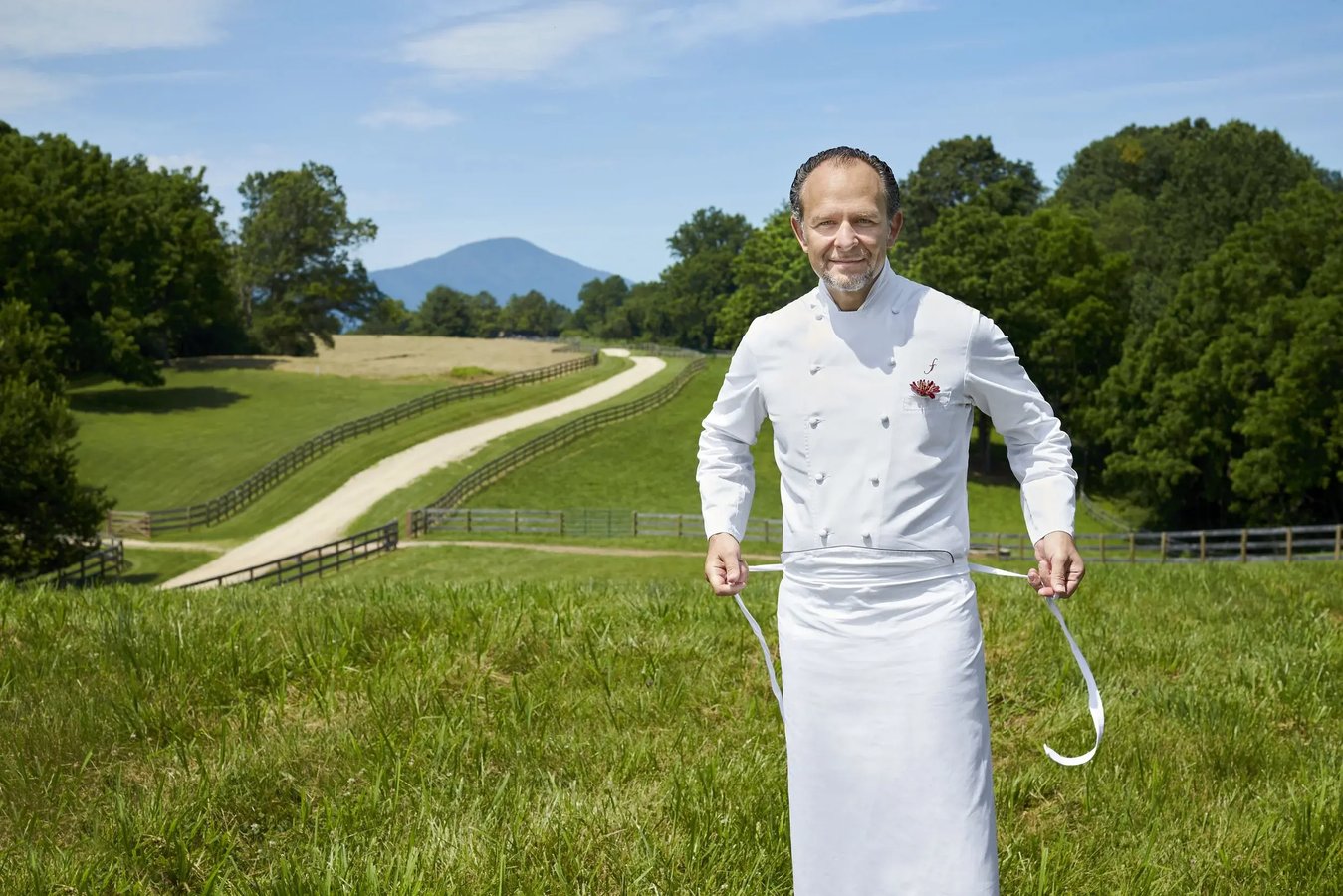
What does it take to turn a passion for food into an internationally recognized culinary career?
Chef Fabio Trabocchi’s journey offers an inspiring example.
Recently featured on CBS Saturday Morning’s “The Dish,” Trabocchi discussed his career and approach to Italian cuisine at Fiola Mare in Washington, D.C. Behind that success is a career shaped by international experience, mentorship, technical development, and a deep connection to his Italian roots.
For aspiring chefs and hospitality professionals, his story offers something particularly valuable: a look at how experiences across countries, kitchens, and cultures can eventually shape your own professional identity.
From Le Marche to an International Culinary Career
Long before becoming a chef and restaurateur in Washington, D.C., Trabocchi grew up in Le Marche, Italy, along the Adriatic Coast. According to his official biography, his relationship with food began at home. He later pursued formal culinary education and apprenticed with acclaimed Italian chef Gualtiero Marchesi before building experience across international kitchens.
Trabocchi went on to work in multiple countries and cities before establishing himself in the United States. Each destination introduced a different professional environment, culinary perspective, and opportunity to develop his craft.
Read more about his career journey.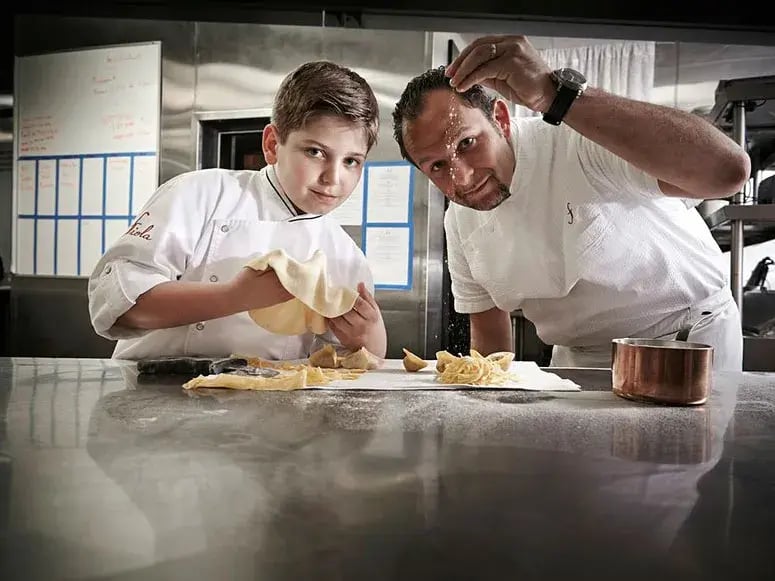
Lesson #1: Learn From Different Environments
International hospitality experience is about more than adding another destination to your résumé. Working in different environments can expose you to new ingredients, techniques, service expectations, leadership styles, workplace cultures, and guest preferences.
In 2001, The Ritz-Carlton in Tysons Corner recruited Trabocchi to open Maestro. During that chapter of his career, he received the James Beard Foundation’s Best Chef: Mid-Atlantic recognition and was named one of Food & Wine’s Best New Chefs. He later moved to New York to lead Fiamma before returning to Washington, D.C. Explore his official biography.
The lesson is not simply to move around. It is to keep learning wherever you are. A new environment becomes valuable when you observe, ask questions, accept feedback, and carry the strongest lessons from one experience into the next.
Lesson #2: Build Skills Before Chasing Titles
Hospitality careers rarely happen overnight. Behind a title such as Executive Chef or Restaurateur are years spent developing the technical and interpersonal skills needed to lead at that level.
For culinary professionals, that may mean learning consistency, mise en place, timing, ingredient knowledge, food safety, communication, cost awareness, and teamwork before being responsible for an entire kitchen. For Food & Beverage or Rooms professionals, the principle is similar: strong leadership is often built by first understanding the operational details.
Your next position does not necessarily need to be your dream title. Sometimes the more useful question is: What can this experience teach me that I will need for the role I want five years from now?
Lesson #3: Your Background Can Become Your Strength
International experience does not mean leaving your identity behind. One of the distinctive elements of Trabocchi’s restaurants is the connection between his global experience and his Italian heritage.
Fiola in Washington, D.C. remains rooted in regional Italian cooking while combining classic and modern elements. The Michelin Guide currently lists Fiola among its Washington, D.C. selections.
For international hospitality professionals, there is an important lesson here: learning from another culture does not require replacing your own. The strongest hospitality professionals can learn to combine the two, bringing their background and perspective into an increasingly global industry.
From One Restaurant to a Hospitality Group
Trabocchi returned to Washington and opened Fiola in 2011. Since then, Fabio Trabocchi Restaurants has expanded to include concepts such as Fiola, Fiola Mare, Del Mar, Sfoglina, and Seta aboard The Ritz-Carlton Yacht Collection.
The concepts may differ, but the broader lesson remains relevant: growth does not have to mean losing your identity. Whether you are developing a restaurant group or building your individual career, knowing the values behind your work can help you stay consistent even as your responsibilities change.
What Can Future Hospitality Professionals Learn?
You may be at a very different stage of your career from an award-winning chef. That is exactly why stories like this can be useful.
Instead of only looking at where someone is today, look at the steps that came before it. Trabocchi studied, apprenticed, worked internationally, experienced different kitchens and cultures, learned from established chefs, and took on larger responsibilities. Eventually, those experiences became part of the foundation for his own restaurants.
Your journey will not look exactly the same—and it does not need to. Stay curious. Learn from every environment. Build your fundamentals. Find mentors. Be open to different cultures. And remember the perspective you bring from home.
Final Thoughts
Seeing Chef Fabio Trabocchi and Fiola Mare featured on CBS Saturday Morning is about more than recognition for a successful restaurant. It is also a glimpse at what can happen when culinary education, international experience, mentorship, cultural identity, and years of professional development come together.
For the next generation of hospitality professionals, the destination may look exciting—but the journey behind it matters just as much. Your first international experience may not immediately make you an Executive Chef, F&B Director, or hospitality leader, but it could teach you something that eventually helps you become one.
Turning Inspiration Into Experience With HRC International
At HRC International, we believe international hospitality experiences can become an important part of professional and personal development. Through J-1 training and internship opportunities in the United States, eligible hospitality professionals can gain exposure to new working environments, learn from experienced teams, develop their skills, and experience American culture while sharing their own.
Ready to explore where your hospitality career could take you next? Explore opportunities with HRC International.