Chef’s Toolkit: Must-Have Skills for International Kitchens
In the global world of gastronomy, success in the kitchen demands not just passion but skill, adaptability, and cultural understanding. When you join hospitality training programs, you’re stepping into an international kitchen environment—where you will learn those qualities firsthand.
Take our alumni Alexander Morris Samaniego for example. On his placement with Grand Hotel Resort & Spa, he said:
“The greatest accomplishment I learned was being a leader in the kitchen team, organizing and keeping the line service in full operational status with quality, fresh products, and beautiful dishes. … I truly felt that I grew as a professional chef, and everyone told me that all the time—they saw my commitment, passion, and love for the kitchen.” (HRC International)
His story shows how the right training and mindset can turn ambition into excellence.
In this article we’ll look at four core skill-areas that international kitchens demand—and show how hospitality training programs help build them.
Precision & Passion: Mastering Knife Skills
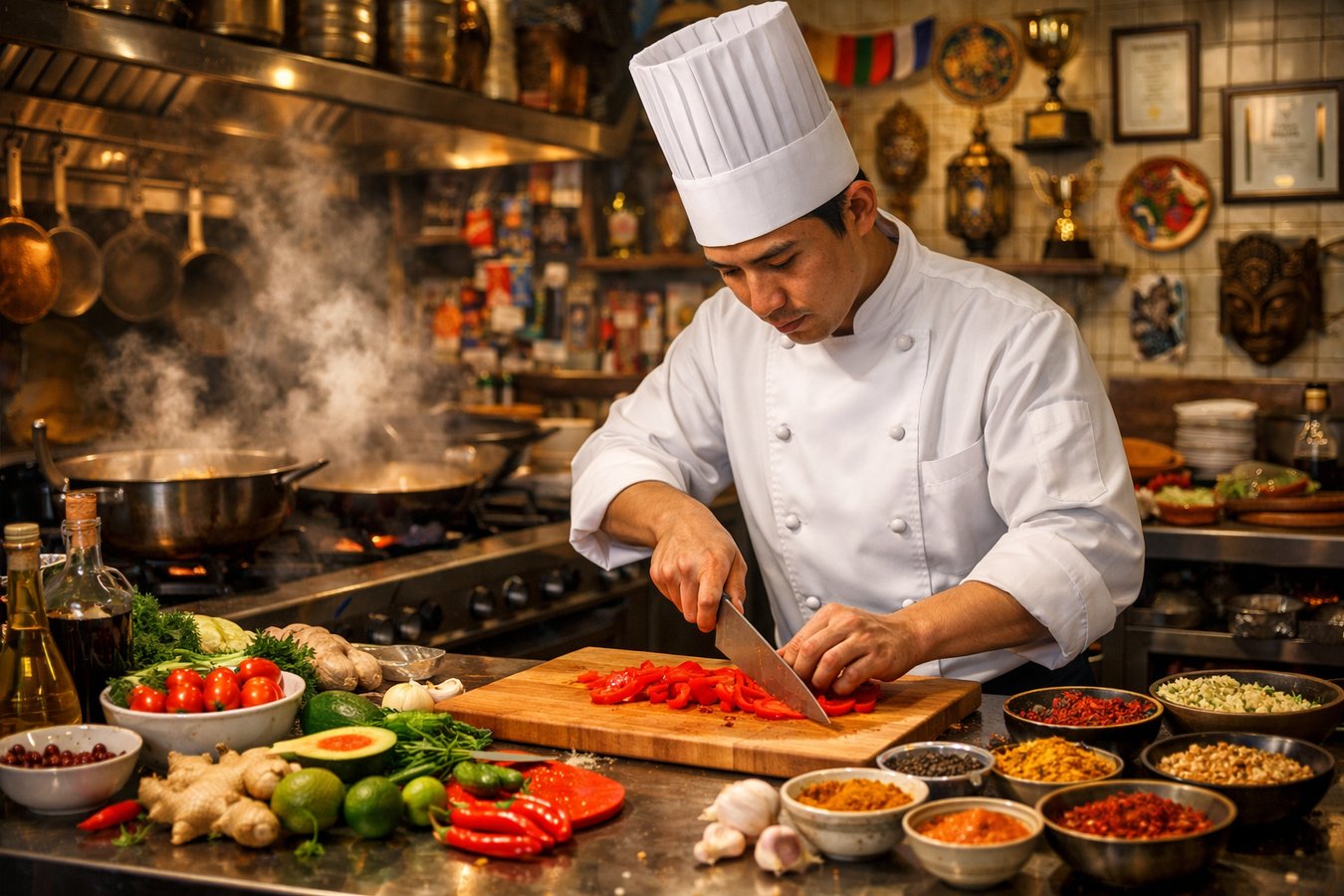
Every great kitchen professional knows that knife skills matter. It’s not just about speed—it’s about precision, consistency, and safety. In international kitchens you’ll face a variety of cuisines and cutting techniques: from Western julienne and batonnet to Japanese sashimi and French tourné.
According to the Culinary Institute of America (CIA), professional knife skills improve workflow efficiencies by up to 30%—less time prepping, fewer mistakes, less waste.
Within hospitality training programs, you’ll have hands-on time with expert chefs, practicing these cuts, learning blade types, grips, sharpening, and speed under pressure. This builds not just technique, but confidence.
Imagine: you’re in a busy service period, names being called, orders coming in. Because you’ve trained, you handle your knife work calmly, your plating is clean, your timing perfect. That readiness comes from the environment you practice in.
Menu Engineering: Where Creativity Meets Business
Cooking great food is one thing; designing a menu that sells and sustains a kitchen is another. Menu engineering—creating dishes that guests love, that kitchens can deliver, and that deliver profit—is increasingly important in international hospitality.
A report by TouchBistro (2024) found that effective menu engineering can increase restaurant profitability by up to 15%. That means chefs and kitchen teams who understand cost percentages, popular items, presentation design, and guest psychology are in demand.
Sustainable Practices: Cooking with Purpose
Sustainability in the kitchen isn’t optional—it’s essential. Globally, kitchens must become more efficient, source locally, reduce waste, and embrace eco-friendly processes. According to the World Resources Institute (WRI), about one-third of all food produced is wasted annually. That’s a huge opportunity in hospitality.
Major global hospitality brands are integrating sustainability goals into food operations—reusable amenities, seasonal sourcing, waste tracking. Within hospitality training programs, you’ll learn how to:
- select sustainable ingredients
- minimize kitchen waste
- plan menus around seasonal availability
- support local suppliers
Working in an international kitchen, you may find yourself implementing a zero-waste initiative—and that experience will set you apart when employers ask: How have you made a kitchen more sustainable?
Cultural Intelligence: The Secret Ingredient in Global Kitchens
Working in an international kitchen isn’t only about recipes—it’s also about people. Your co-chefs might be from different continents; guests from far-flung places; produce from everywhere. A kitchen with cultural intelligence flows smoothly and creates cuisine that resonates globally.
A study published in the Harvard Business Review found that teams strong in cultural intelligence outperform others by 35% in creativity and collaboration. That makes these skills highly prized in hospitality.
Within hospitality training programs, you’ll train alongside people from diverse backgrounds. You’ll learn to communicate clearly, respect different cooking styles, adapt service across cultures, and lead when necessary. That makes you not just a technical cook—but a global kitchen professional.
Time Management & Team Coordination: The Kitchen's Rhythm
An international kitchen moves at high speed. The orders roll in. The timeline from cook to plate matters. That’s where time management and coordination become crucial. According to Caterer.com, 80% of hospitality managers rank teamwork and coordination as the most important soft skills behind the scenes.
In hospitality training programs, you’ll rotate through stations, shadow senior chefs, learn shift timing, and communicate with front-of-house. You’re not just practicing cooking—you’re learning how to operate a kitchen under pressure, meet service timelines, and maintain quality.
How Hospitality Training Programs Build Global-Ready Kitchen Talent
You now see the key skill areas. But how do hospitality training programs help you build them? Here’s what you’ll typically experience:
- Real-world placements in internationally-recognized kitchens.
- Mentorship by chefs with high standards and global experience.
- Cross-department exposure: back-of-house, front-of-house, banquet, fine dining.
- Cultural immersion: new country, new ingredients, new service models.
- Networking with industry professionals from around the world.
HRC International’s hospitality training programs partner with top-tier hotels and restaurants in the U.S. and beyond, offering culinary participants hands-on training, professional development, and cultural exchange—making you a desirable candidate wherever you go.
Also read: Becoming a Michelin Star Chef: A Guide to Elevating Your Culinary Career
Your Global Culinary Journey Starts Here
Success in an international kitchen is about more than recipes. Knife mastery, menu engineering, sustainability, cultural intelligence, teamwork—they all matter. When you’re part of hospitality training programs, you don’t just learn skills—you learn how to apply them globally.
If you’re ready to take your culinary passion into the global arena, start today. Explore HRC International’s hospitality training programs and transform your potential into a thriving international career. 👉 Start now: Explore HRC International’s programs
Let those kitchens around the world become your classroom.
Read more: How Chefs Can Work in the USA: Unlocking Hospitality Jobs Abroad